Small business energy incentive

Clarke McEwan Accountants

The federal government has announced a small business energy incentive as part of the 2023-24 Federal Budget, which allows a business with an aggregated annual turnover of less than $50 million a 20% bonus deduction for expenditure that supports electrification and the more efficient use of energy.


The additional deduction will be available for eligible expenditure of up to $100,000 and is therefore capped at $20,000 for each business.


Eligible expenditure


To be eligible for the bonus deduction:


• the expenditure must be eligible for a deduction under another provision of the tax law; and

• the asset must be first used or installed ready for use, or the improvement cost incurred, between 1 July 2023 and 30 June 2024.


Depreciating assets


The eligible expenditure includes a range of depreciating assets and upgrades to existing assets, including upgrades to more efficient electrical goods.


Depreciating assets that use electricity instead of a fossil fuel, use electricity more efficiently or facilitate energy storage, efficiency or demand management may qualify for the bonus deduction.


Improvements


Asset improvements that allow an asset to only use electricity, be more energy efficient or that allow for energy use by an asset to be monitored, reduced at specific times, or confined to specific times provided the asset being improved uses electricity or energy generated from a renewable source may qualify for a bonus deduction.


Exclusions


Certain exclusions will apply, such as:


• assets, and expenditure on assets, that can use a fossil fuel

• assets which have the sole or predominant purpose of generating electricity (such as solar panels)

• capital works

• motor vehicles (including hybrid and electric vehicles) and expenditure on motor vehicles

• assets and expenditure on an asset where expenditure on the asset is allocated to a software development pool; and

• financing costs, including interest, payments in the nature of interest and expenses of borrowing


Electric and hybrid vehicles may be eligible for other tax incentives such as the FBT exemption (conditions apply).


Claiming the bonus deduction


For depreciating assets first used or installed during the 2023–24 income year, businesses must claim the bonus deduction in the 2023–24 income year. For improvements made to existing assets, entities must claim the bonus deduction in the income year in which the improvement cost is incurred.


Early and late balancers may claim the bonus deduction across more than one income year, provided the eligible asset was first used or installed, or the improvement cost was incurred, during the bonus period.


Contact us


If you are planning to spend on electrification and the more efficient use of energy, consider conducting installations and upgrades to eligible assets in the 2023-24 income year to be able to avail of the $20,000 bonus tax deduction.


Any expenditure incurred in excess of the $100,000 cap may still be eligible for other tax deductions under small business depreciation rules.


This measure is currently in the exposure draft stage, we will keep you posted as the bill progresses through the parliamentary approval process.


Please feel free to contact our office if you need more information about this tax incentive.

By Clarke McEwan September 1, 2026
At the Federal Budget in May 2026, the Government announced that it would reintroduce a loss carry back tax offset for companies, providing a crucial buffer to any business facing difficult trading conditions.
By Clarke McEwan August 30, 2026
Tax Time 2026 is in full swing, and with that comes a decision for anyone who uses their car for work purposes: is it better to claim a deduction using the logbook or cents per kilometre method? When can I claim car expenses? Broadly, tax deductions for car expenses (i.e. the costs you incur to own and operate a car) are available where you use your car for work-related trips, such as for travel between workplaces or to perform your work duties. The exception is ordinary commuting to and from work - such expenses cannot typically be claimed, as they’re considered private expenses. Cents per kilometre method The cents per kilometre method allows you to claim a fixed rate for each work-related kilometre you travel, up to a maximum of 5,000 km each year. This fixed rate per km covers all of your car expenses for a year, including decline in value, registration and insurance, maintenance, repairs and fuel costs. For the 2025-26 tax year, the rate of deduction is 88 cents per kilometre, which means this tax time, the maximum potential amount of deduction is $4,400. (And keep in mind that the rate of deduction has been increased to 91 cents per km as of 1 July 2026, meaning a total potential deduction of $4,550 in the 2026-27 tax year). One of the benefits of using the cents per kilometre method is that it’s relatively simple, as you don’t need to keep receipts for your fuel or car expenses. However, you do need to keep records to show how you’ve calculated your work-related kilometres (for example, a diary), and you also need to be able to show that you own the car you’re using for work. Logbook method If you have a lot of work-related car expenses and have the time, you might find that the logbook method gives you the best deduction. The logbook method allows you to claim the work-related portion of your actual car expenses. This means that you can claim for a percentage of the actual expenses incurred on running costs such as fuel, electricity, servicing, registration, insurance and the decline in value, provided you’ve used the car in the course of your work. However, as the potential deductions under the logbook method are higher, there are stricter record-keeping requirements to meet. This includes keeping a logbook, which allows the calculation of how much you can claim back, it must: - cover at least 12 continuous weeks and be broadly representative of your travel, - include the reason and purpose, as well as the destination of every work-related journey, - the odometer reading at the start and end of each journey, - and the total kilometres travelled on the journey, - include odometer readings for the start and end of the logbook period and the total kilometres travelled during that period. Each journey in your logbook must be made at the end of the journey or as soon as possible afterwards. If you don't have a valid logbook, then unfortunately you cannot use the logbook method to claim car expenses, although the cents per km method may be available instead. Which is better? The answer to whether you should choose the logbook or cents per km method is very dependent on your personal situation. If you have light work-related car use and don’t love keeping extensive records, the cents per km method may be better suited to your needs, while those who use their car for work frequently may receive a higher deduction under the logbook method. If you’re unsure which method is best for you, speak to a member of our team today.
Why Allied Health Practices Need an Accountant Who Actually Understands Allied Health
By Clarke McEwan August 19, 2026
Why Allied Health Practices Need an Accountant Who Actually Understands Allied Health
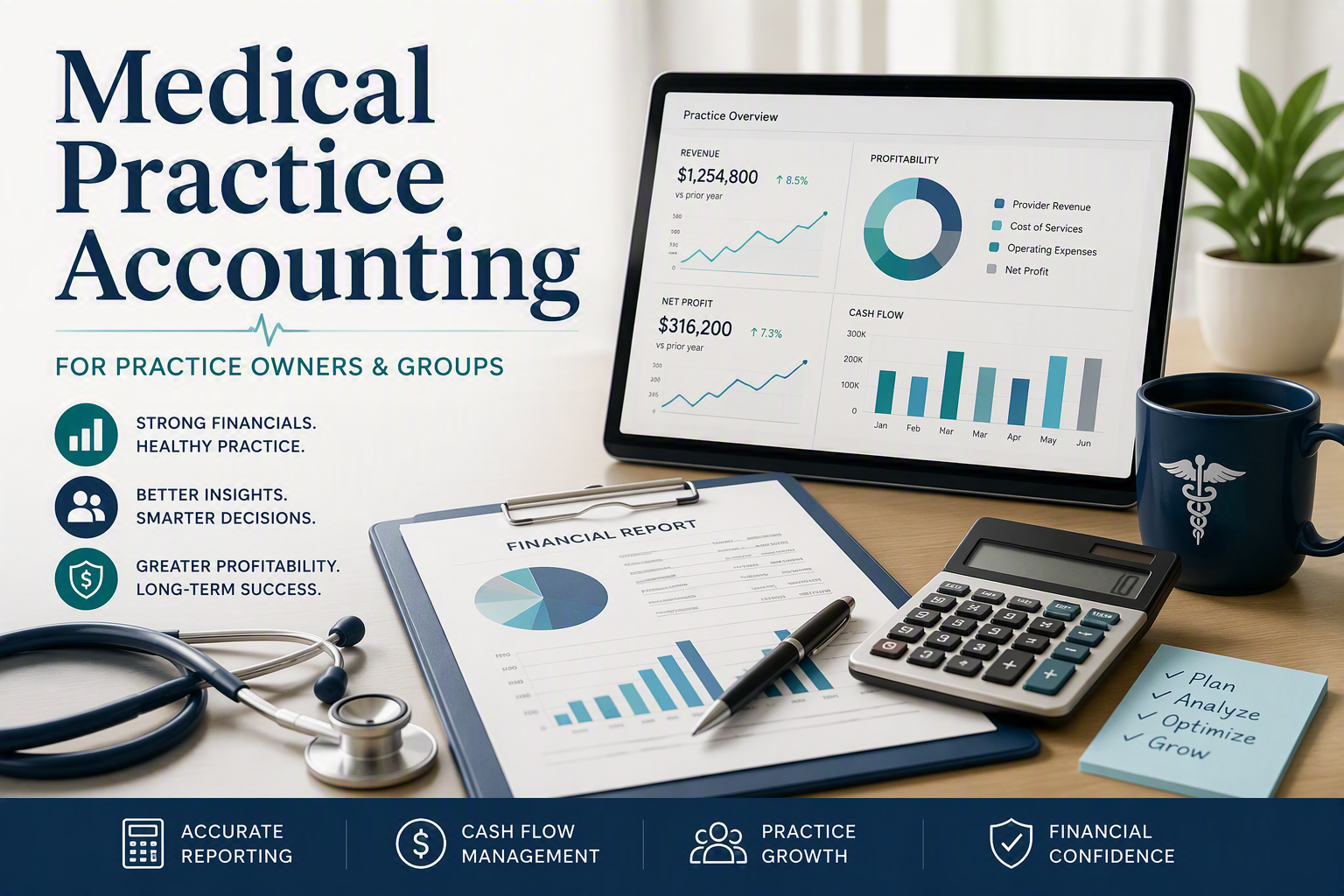
Medical Practice Accounting for Practice Owners & Groups
By Clarke McEwan August 17, 2026
Medical Practice Accounting for Practice Owners & Groups
Running a successful medical practice requires more than delivering excellent patient care.
By Clarke McEwan August 11, 2026
Running a successful medical practice requires more than delivering excellent patient care. Strong financial management is essential for maintaining profitability, supporting growth, meeting compliance obligations, and ensuring the long-term sustainability of the practice.
By Clarke McEwan August 10, 2026
To ensure passage of the negative gearing and CGT discount changes that were announced in the May 2026 Federal Budget the Government agreed to make amendments to the SMSF borrowing rules. SMSFs are able to borrow in restricted circumstances which includes borrowing under a limited recourse borrowing arrangement (LRBA) to purchase a single acquirable asset. While there have previously been no specific legislative restrictions on the type of asset a SMSF can borrow to purchase, most commonly we see LRBAs being used to purchase property. Up until this point, this could have been any type of real property. These amendments will mean that when SMSF trustees wish to borrow to purchase a property, it must meet the business real property (BRP) definition. This BRP definition relates to usage of the property rather than zoning or what the property was originally built for. This change became law on 26 June 2026, but the Bill includes a 45 day transitional period which will finish on 10 August 2026. This transitional period may allow for arrangements that are currently being implemented on non-BRP assets to be allowable under the new rules where settlement occurs after 10 August 2026, provided the arrangement to purchase the property was entered into on or before 10 August 2026. We recommend that SMSF trustees who are currently implementing LRBA arrangements on non-BRP assets seek specialist SMSF legal advice to ensure their arrangements meet these transitional rules. While this change has been referred to in the media as a ban on super funds borrowing to purchase residential property, the use of the BRP definition makes the change slightly more complex than this. As this definition relates to usage of the property, it is possible that some residentially designed properties could meet the BRP definition (for example, a medical practice that operates from a residentially designed terrace dwelling). The BRP definition also requires that the property is wholly and exclusively used for business purposes. This could mean that some properties that may initially appear to be commercial in nature may not meet the BRP definition (for example, a mixed use residential and retail property on a single title). We recommend that SMSF trustees entering into new LRBAs seek advice from specialist legal and financial advisers to ensure the new requirements are met. Existing arrangements The updated rules allow for existing LRBAs over non-BRP assets to continue. They also allow for existing arrangements to be refinanced, subject to lender availability and approval. For any further information please contact our office.
More Posts