4 reasons why you need to schedule family business meetings

Clarke McEwan Accountants


Clear communication is vital to the success of any business.
This is especially true in the case of family businesses, which account for more than two-thirds of international companies.

Ninety per cent of family firms conduct business meetings on a regular basis. If yours is not yet among them, here are four reasons why you should consider making family meetings a top priority in 2017.

Meetings Build Unity

Humans have always yearned for a sense of belonging. An old Navajo interpretation of sadness is to "sleep outside the net." It's no wonder that the vast majority of members within successful family businesses report a sense of pride in being part of the family unit.

In fact, more than eight out of ten owners of the largest family businesses say that they care deeply for fellow family members, devoting a huge amount of time and effort towards cultivating a deep sense of unity among them.

One of the best ways to do this is by holding regular business meetings, which strengthen the relationships between members of the family and help to build cohesion, a key ingredient for success.

When families are in a state of agreement, rather than progress being stunted by short-term thinking, they have the freedom to take a long-term view of their business aspirations. They may, for example, pursue investments that promise growth at some distant point in the future, even if they don't generate quick returns.

Meetings Encourage Innovation

Successful family businesses adapt as their management changes hands from generation to generation, but it's also vital that they take care to maintain relationships as they vary over time.

A family meeting can help prevent stagnation, as newer generations are encouraged to offer fresh perspectives and ideas. Rather than allowing older members of the family to become too set in their ways, injecting exciting and novel ideas can be a lifeline – after all, in companies of all stripes, change is essential for survival.

Brown Brothers, a family-run wine company based in Milawa, Victoria, serves as a case in point. Founded in 1889 by John Francis Brown, the company spans four generations, with the first son, John Charles Brown, initiating ongoing experiments in trialing uncommon varieties.

Now considered "one of Australia's foremost winemaking innovators", his experimental approach continued down the bloodline, with more than 40 varieties now grown in diverse microclimates of the company's vineyards.

Katherine Brown, Assistant Winemaker for the 2015 Vintage, says that "always trying something different" remains a cornerstone of the Brown Brothers' philosophy.

Meetings Create Trust

Many family businesses delegate management responsibility to a few select family leaders. Although it's impossible and impractical to include every family member in every decision, these leaders should do their best to make their actions transparent. Failure to do so can result in anxiety rising within the family ranks.

There is often an unspoken but underlying assumption that certain issues, such as salaries or executive distributions, should remain closed to discussion. Since most family members count on the business for their livelihood, however, adopting this attitude results in a lack of knowledge. This can breed conflict.

Clear, open communication through regular meetings helps to foster a sense of trust and security. When family members feel able to ask any question without limitation, suspicion diminishes and a sense of security grows.

Meetings Resolve Conflict

Unfortunately, even with a focus on pride and unity, conflict is sometimes unavoidable. Nonetheless, a small amount of conflict can be healthy if families resolve the issues surrounding the disagreement in a positive manner.

The most successful families excel at resolving conflict, rapidly creating solutions and making adjustments to their ongoing practices. Working through differences can bring people closer together and enhance family cohesion.

Pretending that a conflict doesn't exist in the first place can cause serious problems. Families that feel unable to resolve conflict may delay making important decisions that both damage the overall health of the business and result in missed opportunities.

While family meetings can often be difficult, it's worth it in the end. Meetings can be used to facilitate business decisions, resolve differences, build trust and encourage innovation, allowing for families to work together in deciding on the best future for their enterprise.

David Harland CPA is managing director of FINH, an organisation that specialises in the provision of advice to family groups in business across the Asia-Pacific region. The opinions expressed in this article are those of the author.


By Clarke McEwan September 1, 2026
At the Federal Budget in May 2026, the Government announced that it would reintroduce a loss carry back tax offset for companies, providing a crucial buffer to any business facing difficult trading conditions.
By Clarke McEwan August 30, 2026
Tax Time 2026 is in full swing, and with that comes a decision for anyone who uses their car for work purposes: is it better to claim a deduction using the logbook or cents per kilometre method? When can I claim car expenses? Broadly, tax deductions for car expenses (i.e. the costs you incur to own and operate a car) are available where you use your car for work-related trips, such as for travel between workplaces or to perform your work duties. The exception is ordinary commuting to and from work - such expenses cannot typically be claimed, as they’re considered private expenses. Cents per kilometre method The cents per kilometre method allows you to claim a fixed rate for each work-related kilometre you travel, up to a maximum of 5,000 km each year. This fixed rate per km covers all of your car expenses for a year, including decline in value, registration and insurance, maintenance, repairs and fuel costs. For the 2025-26 tax year, the rate of deduction is 88 cents per kilometre, which means this tax time, the maximum potential amount of deduction is $4,400. (And keep in mind that the rate of deduction has been increased to 91 cents per km as of 1 July 2026, meaning a total potential deduction of $4,550 in the 2026-27 tax year). One of the benefits of using the cents per kilometre method is that it’s relatively simple, as you don’t need to keep receipts for your fuel or car expenses. However, you do need to keep records to show how you’ve calculated your work-related kilometres (for example, a diary), and you also need to be able to show that you own the car you’re using for work. Logbook method If you have a lot of work-related car expenses and have the time, you might find that the logbook method gives you the best deduction. The logbook method allows you to claim the work-related portion of your actual car expenses. This means that you can claim for a percentage of the actual expenses incurred on running costs such as fuel, electricity, servicing, registration, insurance and the decline in value, provided you’ve used the car in the course of your work. However, as the potential deductions under the logbook method are higher, there are stricter record-keeping requirements to meet. This includes keeping a logbook, which allows the calculation of how much you can claim back, it must: - cover at least 12 continuous weeks and be broadly representative of your travel, - include the reason and purpose, as well as the destination of every work-related journey, - the odometer reading at the start and end of each journey, - and the total kilometres travelled on the journey, - include odometer readings for the start and end of the logbook period and the total kilometres travelled during that period. Each journey in your logbook must be made at the end of the journey or as soon as possible afterwards. If you don't have a valid logbook, then unfortunately you cannot use the logbook method to claim car expenses, although the cents per km method may be available instead. Which is better? The answer to whether you should choose the logbook or cents per km method is very dependent on your personal situation. If you have light work-related car use and don’t love keeping extensive records, the cents per km method may be better suited to your needs, while those who use their car for work frequently may receive a higher deduction under the logbook method. If you’re unsure which method is best for you, speak to a member of our team today.
Why Allied Health Practices Need an Accountant Who Actually Understands Allied Health
By Clarke McEwan August 19, 2026
Why Allied Health Practices Need an Accountant Who Actually Understands Allied Health
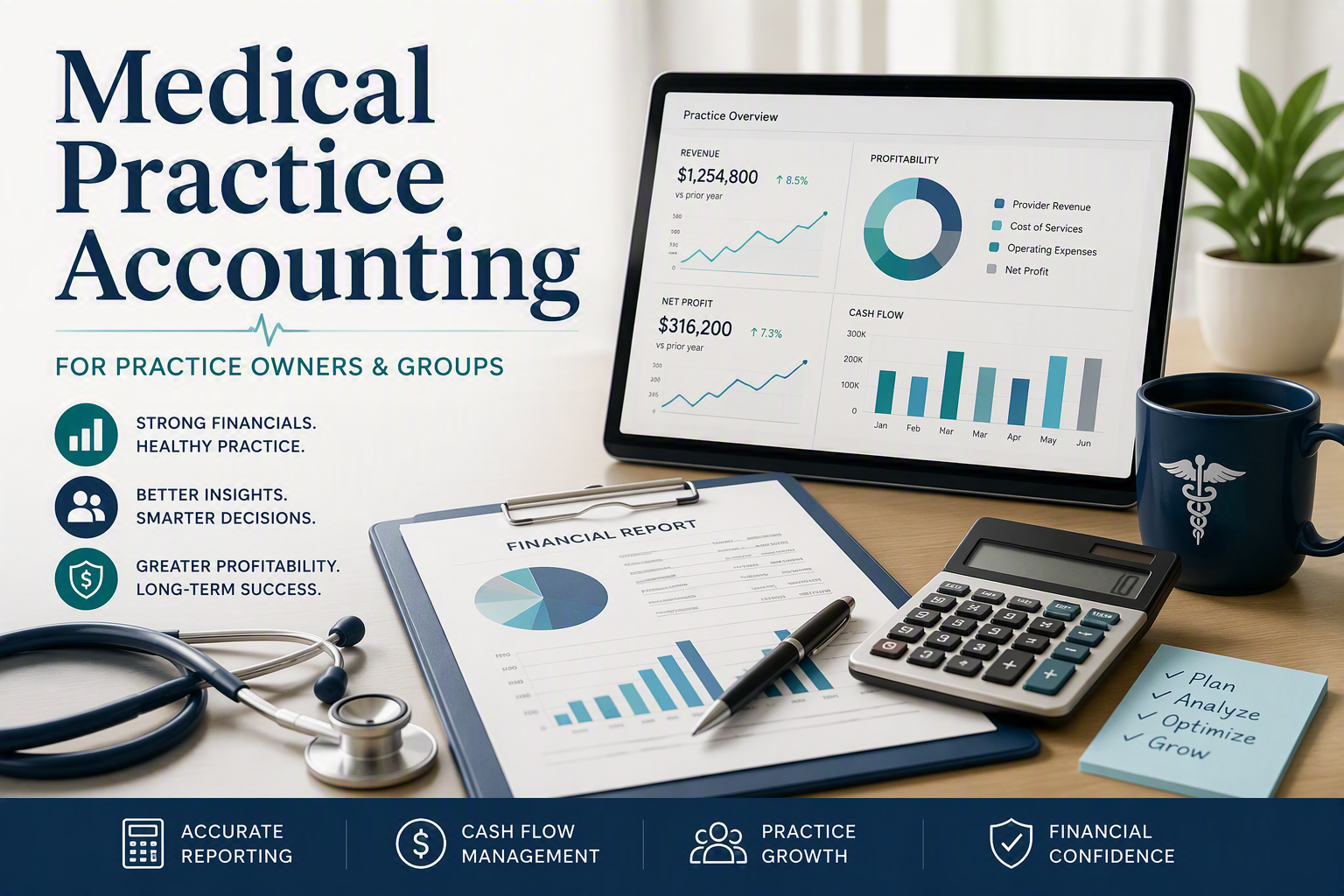
Medical Practice Accounting for Practice Owners & Groups
By Clarke McEwan August 17, 2026
Medical Practice Accounting for Practice Owners & Groups
Running a successful medical practice requires more than delivering excellent patient care.
By Clarke McEwan August 11, 2026
Running a successful medical practice requires more than delivering excellent patient care. Strong financial management is essential for maintaining profitability, supporting growth, meeting compliance obligations, and ensuring the long-term sustainability of the practice.
By Clarke McEwan August 10, 2026
To ensure passage of the negative gearing and CGT discount changes that were announced in the May 2026 Federal Budget the Government agreed to make amendments to the SMSF borrowing rules. SMSFs are able to borrow in restricted circumstances which includes borrowing under a limited recourse borrowing arrangement (LRBA) to purchase a single acquirable asset. While there have previously been no specific legislative restrictions on the type of asset a SMSF can borrow to purchase, most commonly we see LRBAs being used to purchase property. Up until this point, this could have been any type of real property. These amendments will mean that when SMSF trustees wish to borrow to purchase a property, it must meet the business real property (BRP) definition. This BRP definition relates to usage of the property rather than zoning or what the property was originally built for. This change became law on 26 June 2026, but the Bill includes a 45 day transitional period which will finish on 10 August 2026. This transitional period may allow for arrangements that are currently being implemented on non-BRP assets to be allowable under the new rules where settlement occurs after 10 August 2026, provided the arrangement to purchase the property was entered into on or before 10 August 2026. We recommend that SMSF trustees who are currently implementing LRBA arrangements on non-BRP assets seek specialist SMSF legal advice to ensure their arrangements meet these transitional rules. While this change has been referred to in the media as a ban on super funds borrowing to purchase residential property, the use of the BRP definition makes the change slightly more complex than this. As this definition relates to usage of the property, it is possible that some residentially designed properties could meet the BRP definition (for example, a medical practice that operates from a residentially designed terrace dwelling). The BRP definition also requires that the property is wholly and exclusively used for business purposes. This could mean that some properties that may initially appear to be commercial in nature may not meet the BRP definition (for example, a mixed use residential and retail property on a single title). We recommend that SMSF trustees entering into new LRBAs seek advice from specialist legal and financial advisers to ensure the new requirements are met. Existing arrangements The updated rules allow for existing LRBAs over non-BRP assets to continue. They also allow for existing arrangements to be refinanced, subject to lender availability and approval. For any further information please contact our office.
More Posts